
Our Blog

Your First Winter in Braces? Tips for a Warm and Wonderful Holiday

December 7th, 2022
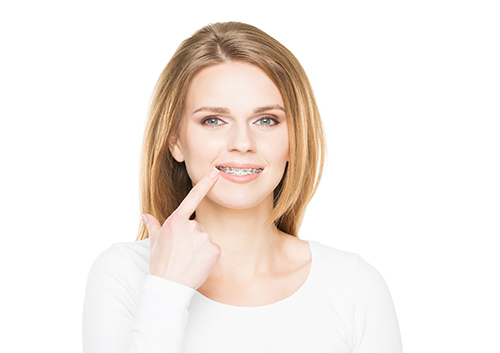
If this is your first winter with braces, you might be wondering how to make the best of the holiday season. John Burke and our team have some suggestions for happy and healthy holiday smiles.

Treat Yourself

Winter means tasty holiday treats, and just because you wear braces doesn’t mean you need to step away from the holiday table! You can enjoy your favorites if you remember to check your list for the usual problem foods. Hard, crunchy, chewy, and sticky items? Naughty list.

  • Crunchy vegetables on the appetizer plate
  • Nuts
  • Hard rolls
  • Candy canes and other hard sugar treats
  • Caramels, Toffee and other sticky candies
  • Pecan pie
  • Fruit cake

Luckily, there are plenty of nice alternatives.

  • Turkey and ham—remember, small pieces are best
  • Dressing and stuffing
  • Mashed potatoes
  • Soft breads and rolls
  • Pumpkin pie—but skip a tough crust!
  • Cheesecake
  • Soft cookies and cakes
  • Soft chocolates

We’re happy to provide recommendations for braces-friendly holiday foods. And we don’t expect you to turn down every sweet treat this season.  Just be sure that if you enjoy something sugary, brush carefully after indulging.

Express Yourself

While you’re decking the halls, or pinning up the New Year’s balloons and streamers, or even choosing a great holiday outfit, don't forget that your ligatures can be decorative as well as functional.

  • Celebrating Christmas? Red and green bands around your brackets are jolly and traditional.
  • How about Hanukkah? Try blue and white!
  • Love the season? Icy silvers and pale blues are a frosty statement—and can have the benefit of making your teeth look whiter, as well. Snowy white? The arctic idea is great, but white bands can sometimes make teeth look more yellow, or become stained themselves.
  • Glam New Year? Gold adds sparkle to your smile, but can bring out any yellow tones in your teeth. Silver might be the perfect choice, because it is generally neutral with enamel shades.

Check out our ligature colors for the best possible choices for your teeth and coloring. Take advantage of these options to create a fresh, confident look for the season. Give others the gift of your smile!

Look After Yourself

Winter comes with some special reminders about your dental health.

  • Winter sports are a great way to celebrate the snow and ice, but be sure to protect your teeth and braces. If you enjoy skiing, snowboarding, ice skating, hockey, or any other winter activities, talk to us about why a mouth guard is so important.
  • While you enjoy your winter break, don’t forget to keep up with your dental routine. And because ‘tis the season for holiday treats, be especially careful to clean your teeth and braces after sweet desserts and snacks. Don’t forget to floss!
  • What do cold breezes and hot chocolate have in common? They can both trigger tooth sensitivity! While some sensitivity is normal after an adjustment, if you find you are experiencing tooth sensitivity more often or more strongly than you usually do, give us a call. It might be something as simple as brushing habits, or you might need to see your dentist.

If you have any questions about your braces, in this season or any other, just ask when you visit our Frankfort, IL office. Your beautiful, healthy, and confident smile can make this the most wonderful time of the year!


Positioned for Success

November 30th, 2022

As you near the end of your orthodontic treatment, you’re probably already imagining the day when your brackets and wires finally come off. Or the moment you’ve finished with your last set of aligners. That day might come just a bit sooner if John Burke and our team recommend a positioner.

While not as well-known as other orthodontic treatments, a positioner is an appliance that can shorten your time in traditional braces and aligners by weeks or even months. Curious? Read on!

  • What Exactly Is a Positioner?

A positioner resembles a clear mouthguard. Its arched shape is designed to fit snugly over your teeth. It’s sometimes called a finishing appliance, because it’s designed to make those last small adjustments to your alignment and bite. If you’re a good candidate for a positioner, it can replace your braces or aligners for your last several weeks or months of treatment.

  • How Are Positioners Made?

This appliance is custom fabricated to fit your very specific orthodontic needs. Commonly, a mold is made of your teeth. A model of your teeth is made from this mold. Precision instruments are used to move the model teeth into your ideal alignment.

Once this model of your future finished smile is complete, it is used to create the positioner. When the thermoplastic material is molded to the model, it creates an appliance with an indentation for each individual tooth in its desired final location.

Available in a variety of materials, a positioner is most often designed as a clear single piece, covering both your upper and lower teeth. This makes sure that your teeth are not only aligned properly, but that your upper and lower teeth are working together for a healthy bite. Openings in the positioner provide airways which allow you to breathe easily.

  • How Do Positioners Work?

Because your teeth haven’t settled firmly into place yet (this will happen as you wear your retainer), they’re still able to move. That’s why your positioner is shaped to fit your teeth in their future ideal placement, not where they are at present.

Positioners require your active participation. Your teeth move to the ideal spots molded into the positioner through “exercise”—biting down on your appliance for 15-20 seconds before relaxing your bite, usually every 10-15 minutes during your daily wear. The gentle force provided by your jaw muscles helps guide your teeth into position more quickly. John Burke will give you instructions on just how to—and how often to—do these exercises.

  • How Long Are They Worn?

Positioners are commonly worn at least four hours a day to start with and all night long, or John Burke might recommend 24 hour a day wear for the first week. As you progress, you’ll wear them for shorter periods during the day, gradually tapering off until your treatment is complete.

Depending on the amount of correction that’s still needed, positioner use ranges from several weeks to several months. One thing that will ensure that your time in a positioner is as short as it can be is your willingness to follow our instructions. The speed and effectiveness of your final tooth movements is largely up to you!

  • Caring for a Positioner

Gentle treatment is best. Clean your positioner before and after wearing it using a toothbrush and mild toothpaste. Never boil it or expose it to heat. We will give you instructions for how to clean it more thoroughly, if needed.

Like retainers, clear aligners, and mouthguards, a positioner needs to be protected when it’s not in your mouth. Your positioner will come with a case, so be sure to use it!

Positioners aren’t recommended for every orthodontic patient. But if you feel this might be an option worth pursuing, talk to us when you visit our Frankfort, IL office. A positioner could be an effective, time-saving step on your path to a lifetime of healthy smiles.

How long after my braces come off should I wear my retainer?

November 30th, 2022

Braces are an investment in your smile. When your teeth reach a desired straightness, you’ll have a beautiful smile, but it’s important to keep it that way! You can accomplish this with a retainer provided by Burke Orthodontics.

A retainer is a small, custom-fit device that reinforces the new position of your teeth after your braces are removed. But for many patients, especially the youngest ones, wearing a retainer may seem like an annoyance. So exactly how long after your braces come off should you wear your retainer?

Graduation of Wear Time

When we remove your braces, John Burke will evaluate the condition of the bone structure surrounding your teeth and determine how well it is adjusting to the new position of your teeth. For the first few months, we may require you to wear your retainer both day and night, except during meal times and for brushing and flossing.

As the bone and gum tissues adjust to your new smile, we may determine that you need to wear your retainer only at night. After about one year of wearing the retainer every night, you may be able to take a couple of nights off each week.

However, we do not recommend ever stopping permanently. To best secure the position of the teeth, especially through future extractions and oral health changes, wearing your retainer a few nights a week will be necessary for many years.

Considerations

If you are concerned about your appearance when you wear a retainer, there are many that can be worn discreetly. You could choose a clear plastic one that is less obvious during the months immediately following removal of your braces. When you change to night wear only, clear wire retainers are available for minimal visibility as well.

Another option is a lingual retainer. It is placed on the back sides of your teeth so no one will ever know it is there! Lingual retainers are also permanent, so there’s no risk of losing them.

Remember, wearing your retainer is an investment in your smile. If you fail to wear it consistently, the tissues that support your teeth will be unsupported, and you may begin to experience noticeable shifting. You’ve worked hard to get that beautiful smile — your retainer will let you keep it! Remember to call our Frankfort, IL office if you have any questions about your retainer!

Thanksgiving Trivia

November 23rd, 2022

At Burke Orthodontics we love learning trivia and interesting facts about Thanksgiving! This year, John Burke wanted to share some trivia that might help you feel a bit smarter at the holiday dinner table and help create some great conversation with friends and family.

The Turkey

There is no historical evidence that turkey was eaten at the first Thanksgiving dinner. It was a three-day party shared by the Wamponoag Indians and the pilgrims in 1621. Historians say they likely ate venison and seafood.

According to National Geographic, the dinner at the Plymouth colony was in October and included about 50 English colonists and 90 American Indian men. The first Thanksgiving dinner could have included corn, geese, and pumpkin.

Today, turkey is the meat of choice. According to the National Turkey Association, about 690 million pounds of turkey are consumed during Thanksgiving, or about 46 million turkeys.

The Side Dishes

The green bean casserole became popular about 50 years ago. Created by the Campbell Soup Company, it remains a popular side dish. According to Campbell’s, it was developed when the company was creating an annual holiday cookbook. The company now sells about $20 million worth of cream of mushroom soup each year, which is a major part of the recipe.

While there were likely plenty of cranberries for the pilgrims and Indians to enjoy, sugar was a luxury. What we know today as cranberry sauce was not around in those early Thanksgiving days. About 750 million pounds of cranberries are produced each year in the US, with about 30 percent consumed on Thanksgiving.

The Parade

Since Thanksgiving did not become a national holiday until Lincoln declared it in 1863, the annual parades were not yearly events until much later. The biggest parade that continues to draw crowds is the Macy's Thanksgiving Day Parade. Beginning in 1924 with about 400 employees, they marched from Convent Avenue to 145th Street in New York City. Famous for the huge hot-air balloons today, it was actually live animals borrowed from the Central Park Zoo that were the stars of the show then.

However you choose to spend your Thanksgiving holiday, we wish you a safe, happy and healthy holiday with those you love.

Contact Us!
call email