
Our Blog

At what age should my child have an orthodontic evaluation?

January 21st, 2026

You may have noticed that kids seem to be getting braces and other orthodontic care a lot earlier these days. There was a time, only a decade or two ago, when braces were mainly seen on teenagers, but that is beginning to change. If you’re wondering when to bring your child to our Frankfort, IL office for an orthodontic evaluation, the answer actually has several parts.

The Telltale Signs

If your child has a very crowded set of adult teeth coming in, or if the permanent front teeth came in very early, these are signs that your child should see John Burke, regardless of age.

The Dental Age

Barring signs of trouble or early adult teeth as mentioned above, the time that your child needs to be seen for initial orthodontic evaluation depends not so much upon your child’s actual age, but on what is known as a “dental age.”

The dental age of the patient might be entirely different from his or her actual chronological age; for example, an eight-year-old could have a dental age of 13. It is part of John Burke and our staff’s job to determine the dental age and then make appropriate recommendations for the resolution of orthodontic issues if they are emerging.

The Official Recommended Age

The American Association of Orthodontists officially recommends that kids should see an orthodontist for the first time between the ages of seven and nine. Even if the child does not have all his or her permanent teeth, the teeth growth pattern can usually be predicted quite effectively by an orthodontist.

This allows for a proactive response to emerging problems, and this is the reason that some younger children are now getting orthodontic devices earlier in life. If a young child has serious orthodontic issues emerging, John Burke can usually address the problems immediately and then follow up with another round of treatment when the child has all the adult teeth.

Surprising Ways to Prevent Cavities

January 14th, 2026

There are numerous ways to prevent cavities. Some, like brushing your teeth regularly and visiting our Boca Raton office, are more obvious than others. Beyond the standard methods of preventing cavities there are a number of different ways to keep your mouth healthy that you might also find surprising.

1. Reduce your consumption of carbs and sugar.

The consumption of sugar is ultimately the biggest catalyst for cavities. By limiting the sugar you consume both at meals and while snacking you will in turn be preventing cavities. But this goes for all carbs, not just sugar. See, even more complex, lower glycemic, carbs can lead to cavities in your mouth, so the best way to prevent them is to limit your carbohydrate intake. This is not to say that you have to cut out carbs all together, but by reducing your intake, you will prevent cavities and it can also lead to a healthier body overall.

2. Rinse your mouth with food-grade hydrogen peroxide.

For some people this may seem a little odd, but washing your mouth out with a food-grade hydrogen peroxide is an excellent way to prevent cavities. Doing so will kill harmful bacteria that accumulates in your mouth much in the same way applying the anti-septic to a cut does. That said, when you rinse your mouth out similar to how you would use a mouth wash, you want to make sure you don't swallow the hydrogen peroxide, spit it out instead.

3. Use a straw.

If you are someone that drinks a lot of sugary beverages a great way to prevent cavities is to use a straw. This way the sugar in the beverage does not come into contact with your teeth as much as it would if you were to drink straight from a glass, can, cup, or bottle.

4. Chew gum.

Chewing gum is another viable way of preventing cavities. You, of course, will need to chew a sugarless gum flavored with a substitute like Xylitol, and preferably with a cavity fighting ingredient in it.

5. Eat cheese.

Plain and simple cheese has a protein called casein which helps build calcium in your teeth which is vital to the integrity of your mouth and preventing cavities.

Post-Braces Care: Wear your retainer!

January 14th, 2026

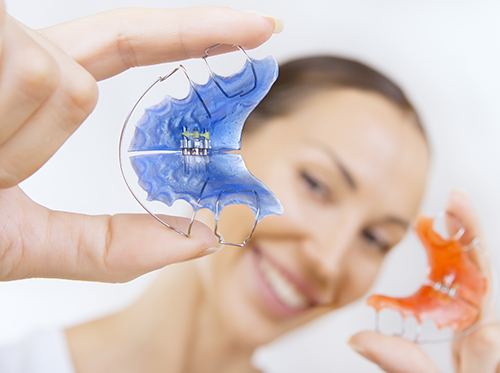
Many patients underestimate the importance of wearing their retainers after their braces come off, but it is one of the most critical post care practices to keep your teeth in alignment. Why spend all that time, energy, and money to straighten your teeth when you don't plan to keep them straightened after treatment?

What is a retainer?

As the name implies, a retainer keeps teeth from moving back to the positions in which they started before treatment was administered; they "retain" your smile and bite. There are many different types of retainers—some are removable and some are permanent. Some retainers are made of plastic and metal (known as Hawley retainers) and others are all plastic or all metal. Some retainers can even be bonded to the back of your teeth!

How long do I need to wear it?

If you've been given a removable retainer by John Burke, you may be wondering how long you need to wear it. It takes time for the tissues and bones around your teeth to reorganize and set into place after braces treatment.

The amount of time you’ll need to wear your retainer depends on your unique situation, but typically, retainers should be worn at least as long as the time you spent in braces. You might need to wear them full-time for a while, and then transition to wearing them only at night. John Burke will have a treatment plan especially for you, and if you stick to it, you'll always have a straight smile.

Nothing is forever (at least without retainers!)

Research has shown that there is no “permanent” position for your teeth to remain in. In fact, some studies say upward of 70% of patients will see a change to their bite and tooth alignment as they get older. This applies to people who have had orthodontic treatment and those who have not. Of course, some people's teeth never seem to shift—you can consider them the lucky ones, as most people's teeth do.

And this is precisely where retainers come in. The only way to ensure your teeth stay in alignment long-term is by wearing your retainers. If you have any questions about retainers or your treatment plan, please ask any member of our Frankfort, IL staff.

Going Green for the New Year

January 7th, 2026

Does your list of New Year’s resolutions for the coming months include reducing your ecological footprint? If so, let’s ring in the year with some basic—and some innovative—dental ideas to help you meet your goal.

  • Conserve Water

This is probably the easiest –and most cost effective!—item on our list. If you leave the water running while you brush, you are watching gallons of water go down the drain every day. Luckily, toothbrushes rely on wrist power rather than water power. Wet your brush before you begin, and use water only as needed to rinse. You’ll save hundreds of gallons of water every year.

And while we’re near your sink, if you like to rinse after brushing and flossing with disposable plastic cups, consider using compostable paper products or a regular drinking glass that you can clean after using.

  • Biodegradable/sustainable /recyclable toothbrushes

Some brushes promise to be completely compostable, with handles manufactured from sustainable woods or bamboo, and heads fitted with biodegradable boar bristles. Investigate before you buy, because boar bristles aren’t for everyone. Some users complain about the taste, and boar bristles are harsher than the soft bristles we recommend to protect your enamel and gums. Organic bristles are also more prone to bacteria growth.

If you prefer the consistency and texture of regular synthetic bristles, or wish to avid animal products, you can still opt for a brush with a handle of sustainable wood or bamboo. These brushes also offer PBA-free bristles, bristles made largely from castor oil, or bristles that use natural ingredients in combination with synthetics.

And don’t forget recycling as a possibility to cut down on your plastic use. Toothbrushes are available with handles made from recycled plastic. And once you’re finished with them, these brushes can be recycled again.

  • Biodegradable dental floss

This is another innovative take on dental supplies, and one that offers lots of new options. Regular dental floss is usually made from waxed nylon. Biodegradable floss, on the other hand, can be made of silk or plant materials, and coated with beeswax or plant-based wax. Some of these biodegradable flosses even come in refillable or compostable packaging.

  • Organic toothpaste

If you’re incorporating organic foods into your diet, you know that organic options are more easily available than ever before. And now there are more organic toothpastes available, as well. Natural toothpastes can be found which are vegan, fair-trade sourced, and preservative- and artificial ingredient-free.

Before you buy, though, do discuss your choices with Dr. Tavory. Why? Because many natural toothpastes are formulated without fluoride, a mineral shown to prevent cavities in study after study. Which leads us to . . .

  • See Your Dentist Regularly for Checkups and Cleanings

Along with your daily dental hygiene routine, don’t forget to make regular appointments for examinations and professional cleanings at our Boca Raton office. Dr. Tavory can help you discover the best ideas for products and practices which are good for you and good for the planet, for a lifetime of natural, sustainable smiles.

Contact Us!
call email