Our Blog

Fun Facts for the Fourth

July 1st, 2020

The Fourth of July is a great time to get together with friends and family members for BBQ, games, fireworks, and other celebrations in honor of our country’s independence. While your fellow revelers eat hot dogs and wave flags, you can impress them by sharing these fascinating facts and historical tidbits about some of our country’s traditions and symbols from the team at Burke Orthodontics.

The Statue of Liberty

With a torch in one hand and a tablet in the other, the Statue of Liberty is one of the most iconic and recognizable symbols of our country. However, as recognizable as certain parts of the statue are, not many people know that broken shackles, which represent oppression and tyranny, are lying at Lady Liberty’s feet. According to the Statue of Liberty-Ellis Island Foundation, the copper-plated lady weighs in at a whopping 450,000 tons and has been holding her torch up for more than 125 years, which must make for some impressive arm muscles.

Nathan’s Hot Dog Eating Contest

Since 1916, people have been flocking to Coney Island on the Fourth of July to witness what some people call the “superbowl of competitive eating.” Nathan’s Hot Dog Eating contest challenges competitors to devour as many hot dogs as they can in just ten minutes, with the current record holder swallowing a whopping 68 hot dogs! If you’d like to witness this bizarre and frenzied eating competition but you won’t be anywhere near Coney Island on the fourth, don’t worry. ESPN has been broadcasting this popular event for several years, so you can watch from the comfort of your couch while you eat a reasonably portioned meal.

The History Behind Fireworks

Viewing the nighttime fireworks display is exciting way to finish off the fourth. Many people know that these brilliant displays probably originated with the Chinese. However, many historians also believe that fireworks were stumbled upon when the Chinese roasted bamboo sticks over fires and watched them explode. After many years of roasting the sticks, a group of alchemists created an early form of gunpowder, which they stuffed into the bamboo sticks to create an even more powerful explosion, paving the way for the today’s modern fireworks.

Whether you’re planning on visiting the Statue of Liberty, watching fireworks in Frankfort, IL, or even participating in a hot dog eating contest, John Burke and our team hope you have a safe and fun-filled holiday. Happy Fourth of July!


How Long Will I Wear My Braces?

June 24th, 2020

How long? Well, a beautiful smile is both science and art—proper teeth and jaw alignment united with aesthetically pleasing results. Orthodontists achieve both these outcomes with a careful analysis of any dental and facial problems, a treatment plan designed specifically for each patient’s needs, and adjustments through each phase of treatment to carefully bring about that beautiful smile.

And that’s a long way of saying, there’s no one, standard answer as to how long a patient will wear braces because there is no one, standard patient. Often, treatment takes from 18 to 24 months, but it can be months shorter or months longer depending on a variety of different circumstances.

  • Different Needs

Your orthodontic needs and goals will generally determine your treatment time. Some patients need only a bit of alignment, which can lead to a fairly short orthodontic experience. Some have malocclusions such as crossbites and open bites that require more complex and lengthy treatment.

And, while we used to think of orthodontics as a teenage rite of passage, that’s certainly no longer the case. Some children will need two-phase orthodontic treatment, where early procedures before the adult teeth even come in ease the way for any necessary second stage treatment when the permanent teeth arrive years later. And some adults will want orthodontic work later in life, where denser bone tissue might lead to (somewhat) longer treatment.

  • Different Appliances

Today’s orthodontics offers you many choices in appliances. Lingual braces are an almost invisible option, with brackets and wires on the inside of the teeth. Aligners use clear, custom molded trays to move the teeth into a better position with each new tray. Even traditional braces are smaller and sleeker today, with metal or less visible ceramic brackets. Depending on the orthodontic goals you want to achieve, there might be a small difference in the amount of time each appliance will take to get you to those goals. Talk to us about all your options and what they mean for treatment time.

  • Different Levels of Participation in the Process

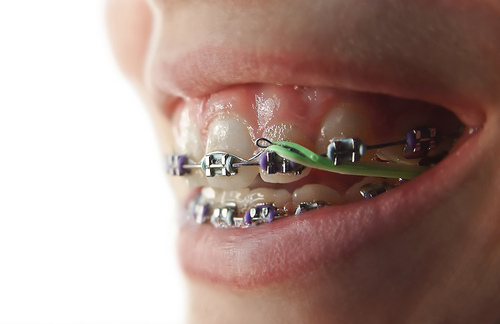
This is one area you can make a real difference! If you follow our instructions for using your appliances most effectively, you’ll make progress as quickly as possible. If you have aligner trays, be sure to wear them for as long as directed each day. If you have rubber bands attached to brackets on your upper and lower teeth, wear them for as many hours as required, because these little bands are actually the tools that are moving your teeth into alignment. If you don’t wear your braces or aligners as directed, not much is going to happen, and certainly not on schedule.

Give our Frankfort, IL office a call, and we can discuss your goals for creating your very best smile. Once we’ve decided on a treatment plan, John Burke can give you a fairly good estimate as to how long your particular treatment will take. And, when you get to share that beautiful, healthy smile, the time you’ve spent achieving it will be well worth it!


Treatment Options for TMD

June 17th, 2020

Temporomandibular dysfunction (TMD) refers to a diverse range of disorders that relate to muscular function in the jaw and face — the temporomandibular joint (TMJ). That could mean difficulty opening your mouth, pain in the jaw or face, or any sort of problem with the jaw joint.

TMD can be difficult to diagnose because of the varied causes. Whatever the case, an accurate diagnosis from John Burke helps make treatment as successful as possible.

Most often, jaw problems will resolve themselves within several weeks or months. Surgeries like arthrocentesis, arthroscopy, and open-joint surgery should be a last resort. More conservative and reversible treatments should come first and are in fact the most critical step in the treatment of TMD.

Less invasive treatments like acupuncture and splints can be helpful, but that will depend on your particular case. It’s worth your while to speak with John Burke at our Frankfort, IL office to learn about solutions that could work for you.

A combination of treatments will most often produce the greatest relief for TMJ patients. It’s a good idea to avoid activities that overuse the jaws, such as chewing gum or clenching your jaws.

You can be proactive in finding relief for TMD by trying the following remedies at home:

  • Eat soft food: When you eat soft and/or blended food, your jaw gets an opportunity to rest. Avoid chewy and crunchy food, and food that requires you to open your mouth wide, like apples or corn on the cob.
  • Apply moist heat: A hot water bottle wrapped in a moist towel can help reduce symptoms.
  • Apply ice: Applying an ice pack wrapped in a cloth or towel for no longer than 15 minutes may also reduce pain and promote healing.
  • Do jaw exercises: A physical therapist can help identify the exercises that will work for you. Jaw exercises have been shown to be an effective treatment method that can be performed at home.
  • Relaxation: Actively try to relax the muscles of the face and lips, and let your teeth come apart. Many find meditation, yoga, and slow, deep breathing to be helpful for reducing stress and tension.
  • Avoid wide yawns: Keep your fist under your jaw when you feel a yawn coming on, to keep your jaw from opening too widely.

Do I really need to wear my rubber bands with my braces?

June 10th, 2020

Most of our patients at Burke Orthodontics will need to wear rubber bands at some point during their orthodontic treatment. The main reason our patients are instructed to wear rubber bands is to correct their bite. If your teeth do not fit together properly, John Burke will recommend that rubber bands be used. John Burke may also recommend using rubber bands to close or open spaces.

Rubber bands are a critical part of your treatment, and wearing them as John Burke and our team recommend will help move your teeth into the desired position. John Burke may ask you to wear your rubber bands full time, meaning that they should only be taken out when you brush and floss your teeth three times a day. Other times, you may be asked to only wear them part-time, like only during the day or only during sleep.

If you still have any questions about orthodontic rubber bands, we invite you to give us a call or ask us during your next adjustment appointment. Remember, wearing rubber bands as prescribed by John Burke is an important step during your treatment, and can reduce the time you have your braces. If you lose your rubber bands or run out, stop by our Frankfort, IL office and pick up more!

Contact Us!
call email