
Our Blog

Water Flossers and Braces

November 10th, 2021
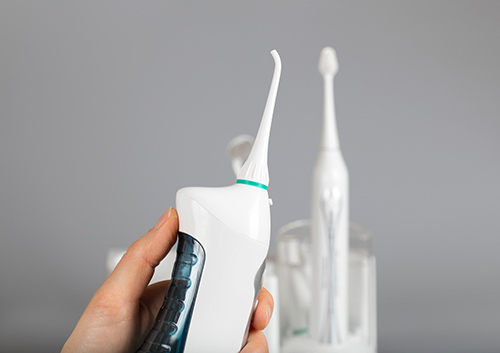
You devote a lot of energy to your orthodontic treatment. Appointments, rubber bands, adjustments, cleaning (so much cleaning)—and why? Because you know that your attractive, healthy smile will be well worth the effort.

But if you find that keeping your teeth and braces clean requires more time and energy than it should, and you’re still not getting the results you’d like, a water flosser might be just the tool you need to help make your cleaning routine easier and more effective.

Plaque and tartar can be a real problem when you wear braces. Cleaning around braces and wires can be a challenge, and it can be difficult to get floss between your teeth and close to your gums, even with special threaders or floss designed to slip behind your wires.

But ignoring bacteria and plaque build-up can lead to cavities, weakened or discolored enamel, and gum problems. Fortunately, a water flosser can help wash away food particles, bacteria, and plaque even in tight, hard-to-reach spaces, while providing gentle cleaning along sensitive gums.

Water flossers use a pulsing stream of water to remove food particles and plaque between and around teeth. You can adjust the water pressure to apply just the right amount of cleaning power, and then direct the flow to your gum line, between your teeth, around your brackets, or anywhere else you need. Some models even offer tapered heads with brushes designed specifically for cleaning braces.

You might consider investing in a water flosser if you have:

  • Mobility issues. If you have joint or mobility issues, a water flosser will let you clean those hard-to-reach areas more easily.
  • Lingual braces. Because lingual braces are on the inside of the teeth, they can be more difficult to clean effectively with regular brushing and flossing.
  • Problems removing plaque. If you find that you are brushing and flossing regularly, but still have plaque build-up around your braces, give water flossing a try.

A beautiful smile is well worth all the time and effort you are devoting to it. If you think a water flosser might save you a bit of that time and effort, and provide better cleaning power, talk to John Burke  about your options during your next visit to our Frankfort, IL office. We’ll let you know if traditional flossing, a water flosser, or a combination of the two will give you your cleanest, healthiest smile.

A Fun Halloween with Braces

October 27th, 2021

Having teeth encased in braces can be discouraging during Halloween. If you or your child has braces, there are certain candies to avoid this holiday season—and in general—while you have braces. Candy can be tempting, especially for children.

But don’t worry; other sweet treat options can readily take their place. Take a look at the American Association of Orthodontists’ tips on how to keep your braces safe.

Treats to avoid because they can cause damage to your braces include:

  • Hard candies
  • Chewy candies
  • Nuts
  • Caramel
  • Licorice
  • Jelly beans
  • Taffy
  • Bubblegum
  • Hard pretzels
  • Popcorn

These goodies should be avoided because they have the potential to bend or break your braces. Broken brackets and loose wires can waste time and money.

Switch out hard, chewy, and sticky candies for these options in the mean time:

  • Soft chocolate
  • Peanut butter cups
  • Gelatin treats
  • Ice cream
  • Smoothies
  • Root beer floats
  • Apple cider

Encouraging your child to stay with alternative, braces-friendly treats may prevent her from trying to eat candies that could break or damage braces. Halloween can still be fun, especially if your youngster (or you) don’t have to visit our Frankfort, IL office get braces fixed.

Make sure to remind your child to avoid harmful candies, and encourage him to exchange treats with friends to make it more fun. Only passing out candies that children can eat safely, such as soft chocolates, can make them feel included.

John Burke and our team hope you enjoy your Halloween season, regardless of whether you are wearing braces.

Post-Braces Care: Wear your retainer!

October 20th, 2021

Many patients underestimate the importance of wearing their retainers after their braces come off, but it is one of the most critical post care practices to keep your teeth in alignment. Why spend all that time, energy, and money to straighten your teeth when you don't plan to keep them straightened after treatment?

What is a retainer?

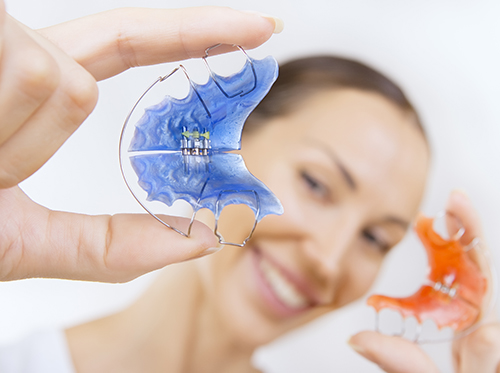
As the name implies, a retainer keeps teeth from moving back to the positions in which they started before treatment was administered; they "retain" your smile and bite. There are many different types of retainers—some are removable and some are permanent. Some retainers are made of plastic and metal (known as Hawley retainers) and others are all plastic or all metal. Some retainers can even be bonded to the back of your teeth!

How long do I need to wear it?

If you've been given a removable retainer by John Burke, you may be wondering how long you need to wear it. It takes time for the tissues and bones around your teeth to reorganize and set into place after braces treatment.

The amount of time you’ll need to wear your retainer depends on your unique situation, but typically, retainers should be worn at least as long as the time you spent in braces. You might need to wear them full-time for a while, and then transition to wearing them only at night. John Burke will have a treatment plan especially for you, and if you stick to it, you'll always have a straight smile.

Nothing is forever (at least without retainers!)

Research has shown that there is no “permanent” position for your teeth to remain in. In fact, some studies say upward of 70% of patients will see a change to their bite and tooth alignment as they get older. This applies to people who have had orthodontic treatment and those who have not. Of course, some people's teeth never seem to shift—you can consider them the lucky ones, as most people's teeth do.

And this is precisely where retainers come in. The only way to ensure your teeth stay in alignment long-term is by wearing your retainers. If you have any questions about retainers or your treatment plan, please ask any member of our Frankfort, IL staff.

What makes teeth crooked?

October 13th, 2021

John Burke and our team hear this question a lot. Some of the common reasons for crooked teeth include:

  • Thumb sucking
  • Tongue thrusting or improper use of the tongue during speaking and swallowing
  • Premature loss of baby teeth, which causes teeth to drift and shift
  • Poor breathing airway caused by enlarged adenoids or tonsils

There are also hereditary factors we get from our parents, like:

  • Extra teeth
  • Large teeth
  • Missing teeth
  • Wide spaces between teeth
  • Small jaws

John Burke and our team know that having crooked teeth isn’t just a cosmetic issue; it can lead to serious health problems as well. Crooked teeth can:

  • Interfere with proper chewing
  • Make keeping teeth clean more of a challenge, increasing the risk of tooth decay, cavities, and gingivitis
  • Strain the teeth, jaws, and muscles, increasing the risk of breaking a tooth

There are several treatment options we offer at Burke Orthodontics that can help correct crooked teeth. Please give us a call at our convenient Frankfort, IL office to learn more or to schedule an initial consultation.

Contact Us!
call email