
Our Blog

Why choose an orthodontic specialist over a general dentist?

April 13th, 2022

Patients have so many choices for straightening their teeth nowadays — clear aligners, ceramic braces, lingual braces, self-ligating braces — but who is best suited to guide them through orthodontic treatment? Well, an orthodontist like John Burke in Frankfort, IL of course!

This may seem obvious, but there’s misinformation circulating with regard to the roles dentists and orthodontists play in treating patients’ oral health.

Dentists are trained to clean teeth, fill cavities, perform certain dental surgeries, and examine overall oral health. Many dentists now offer braces to their patients, but according to the American Association of Orthodontists, it’s better to consult an orthodontist if you need to straighten teeth or fix a bite.

Why an orthodontist? Because they are...

  • Specialists in straightening teeth and aligning jaws, even advanced cases
  • Required to study an additional two to three years after dental school
  • Trained to choose the correct treatment option because they have worked with all the available options
  • Trained to recognize the potential pitfalls with certain treatments and cases, which means there’s less chance of problems after treatment has started or been completed
  • Familiar with emerging treatments and technologies so they can make the best choice for a patient’s case

Some dentists claim to have taken enough continuing education or additional training to offer braces to their patients. But this can't compare to the advanced training an orthodontist receives during his or her education.

Ideally, dentists and orthodontists work hand in hand to make sure oral health and the alignment of teeth and jaws are the best they can be. Think of a dentist as the one who is there for a lifetime, to make sure teeth and gums are healthy.

In contrast, an orthodontist is the highly skilled teammate who helps the dentist by straightening teeth and aligning the jaws over the course of a few years. Instead of one replacing the other, they work together for the health and benefit of their patients.

Play it Safe this Spring

April 6th, 2022

It's springtime and it's again time to remind our patients at Burke Orthodontics to protect their faces and pearly whites while out on the field playing sports. According to the National Youth Sports Safety Foundation, children, high-school athletes and adults have more than 5,000,000 teeth knocked out in sporting events annually.

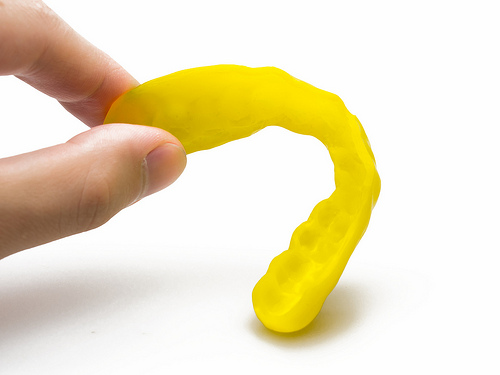
If you are planning on participating in spring sports, it’s imperative to have a proper-fitting mouthguard. Mouthguards can prevent chipped or broken teeth, lip and cheek injuries, jaw fractures, mouth lacerations and even concussions.

Having a mouthguard can make the difference between losing your teeth or not, and because many of our patients who play high school sports have jaws that are still growing, last year’s mouthguard may no longer fit as it should. John Burke and our team at Burke Orthodontics can fit you for a new guard.

To learn more about mouthguards or for general questions about your treatment at our Frankfort, IL office, please give us a call!

Hey, Metal Mouth, Hey, Train Tracks! Six Funny Comebacks for People Who Wear Braces

March 30th, 2022

Brace-ism: believe it or not, it’s a concept. The Urban Dictionary defines brace-ism as “acting mean to people who have braces on their teeth.” Phrases like metal mouth, brace face, and train tracks are common jokes uttered by gap-toothed fools who like to make fun of people with braces.

While ignoring these comments and taking the high road is the best thing to do, there’s nothing wrong with having a few clever retorts and quick-witted comebacks up your sleeve.

  1. The next time someone calls you train tracks, break into an obnoxious train imitation, with lots of toot-toot and chuga-chuga-chuga. Finish off your crazy locomotive impersonation with some sort of deafening train horn. That’ll keep the bullies at bay.
  2. “It’s better to be a brace face than a space case.”
  3. Counter with a ridiculously childish joke that makes the schoolyard tormentor feel even smaller than he already is. “Oh. Yeah. Why did the deer need braces? Because he had buck teeth. Hahaha.” Top it off with an exaggerated eye roll.
  4. “Yeah, my brother tells that joke. He’s six. You guys should hang out.” That’ll stop the haters dead in their tracks. Or would that be train tracks?
  5. Here’s one from the sarcasm grab bag. “Well, I’m just glad there’s a way to fix what’s wrong with my face.”
  6. “I can’t wait to discuss this formative moment at our ten-year class reunion, when my teeth are razor-straight and you’re wearing adult braces.”


Midline Misalignment

March 23rd, 2022

By and large, the human body is a marvel of symmetry. But, of course, no one is perfect. You might have noticed one ear is a bit higher than the other. That you wear a shoe a half-size bigger on your left foot. That one shirtsleeve always looks longer.

Or that your smile looks off-center. This dental asymmetry could be caused by a condition known as “midline misalignment,” and, unlike that left foot, you can do something about it!

The dividing line between our center teeth, upper and lower, is called the midline. If we draw an imaginary line down the middle of a face, from the forehead to the nose to the midpoint of the chin, that line should go right between the front teeth. When it doesn’t, because the teeth have shifted past the midpoint, it’s often due to a condition called midline misalignment.

This kind of misalignment, also known as a deviated midline, can have several causes:

  • Baby teeth that are lost too early

Baby teeth do more than promote healthy eating and speech development. They also reserve space for permanent teeth. If a primary tooth is lost too early, permanent teeth might “drift” to fill the empty space, causing the midline to move as well.

  • Thumb sucking that goes on too long

As a child gets older, and certainly when by the time permanent teeth start to arrive, aggressive thumb sucking can lead to numerous orthodontic problems, including a deviated midline, as the teeth shift in response to that continuous pressure.

  • Missing adult teeth

When you lose a tooth through decay or trauma, or when an adult tooth simply never develops, the remaining teeth can shift over to fill the open spot.

  • Spacing issues

Crowded teeth, teeth with significant gaps between them, very large teeth, very small teeth—all of these issues can affect spacing and midline alignment.

  • Crossbite

A crossbite is a kind of malocclusion, or bite problem. When you have a crossbite, the teeth don’t fit together properly, with upper teeth fitting inside lower teeth, instead of aligning on the outside where they belong. A deviated midline can indicate a posterior crossbite, where the top back teeth slant inwards or fit inside the bottom back teeth.

A tiny bit of midline shift one way or the other might be nothing to worry about, but if one front tooth is literally the center of attention, or if your teeth are noticeably out of alignment, it’s a good idea to talk to our Frankfort, IL orthodontic team.

Because there are several potential causes for midline misalignment, John Burke will carefully analyze your individual situation to determine where the problem lies: with the teeth, the bite, or, rarely, the jaw itself.

John Burke will also offer you your best dental treatment options. A shift of a few millimeters might be treated with clear aligners or traditional braces. A crossbite could require braces or aligners coupled with elastics (rubber bands) to bring your bite into alignment. A palatal expander can help correct a serious crossbite.

Why visit Burke Orthodontics because of a little asymmetry? Because a deviated midline is more than a cosmetic concern. If you have a malocclusion to begin with, or if your misalignment leads to changes in chewing habits, which cause new bite problems, you might be facing jaw pain, chipped and cracked teeth, headaches, and all the other unpleasant consequences of malocclusion.

By and large, perfect symmetry in life is unattainable. But if you want a smile that is well-balanced and healthy, talk to us about all the treatments available to make sure your smile—and not a single tooth—is the center of attention.

Contact Us!
call email